Guide
How to choose an Australia tour: a practical operator checklist
A step-by-step checklist for comparing tours in Australia: group size, vehicles, pacing, inclusions, accommodation, guides, permits, reviews and booking terms, plus the questions to ask an operator before you pay a deposit.
Published
Two tours to the same place can feel like completely different holidays. One might spend most of each day driving between photo stops; another might cover less ground but leave time for long walks, a sunset with no schedule and a guide who explains what you are seeing. This checklist helps you tell them apart before you book.
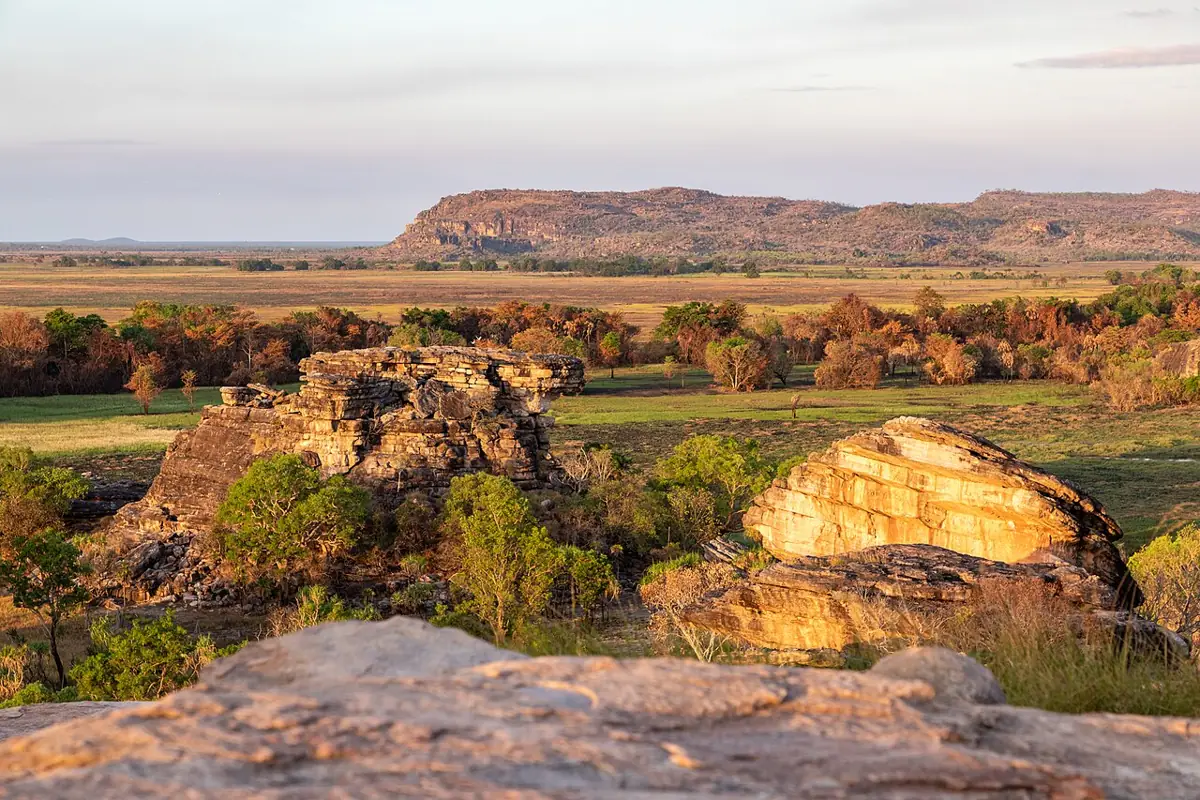
Photo: Kakadu (AU), Kakadu National Park, Nadap Lookout -- 2019 -- 4200.jpg by Dietmar Rabich, CC BY-SA 4.0, via Wikimedia Commons.

We do not rank or recommend operators. Use the steps below to compare any tours you are considering, and read the current terms on each operator's own website before paying.
Step 1: Decide what kind of trip you want
Before comparing companies, be honest about a few preferences:
- Pace. Do you want to see as much as possible, or fewer places in more depth?
- Activity level. Are you comfortable with early starts, long walks in heat, climbing in and out of four-wheel drives, or camping?
- Social style. Do you enjoy travelling with a group of strangers, or would you prefer a private guide or self-drive?
- Comfort. Is a swag under the stars an adventure or a deal-breaker?
These answers narrow the field quickly. A traveller who wants comfort and a gentle pace should be looking at different tours from a traveller who wants to camp in the outback.
Step 2: Check group size and vehicle
Group size shapes almost everything about a tour.
- Small groups (roughly up to two dozen) usually travel in a minibus or four-wheel drive. They get in and out of stops faster and can reach narrower tracks.
- Large coach groups carry more people more comfortably on sealed roads, but each stop takes longer and some walks or sites are out of reach.
- Private tours give full control of the schedule at a higher cost per person.
Ask the maximum group size, not the average, and what vehicle is used on each day. In remote areas, ask whether the vehicle is air-conditioned and whether the tour changes vehicles partway through.
Step 3: Compare time on the road with time on the ground
Australia's distances are the hidden cost of many tours. Ask for, or estimate, the driving time each day and compare it with what you actually do.
| Question | Why it matters |
|---|---|
| How many hours of driving per day? | Long transfers can leave little time for activities |
| When do walks start? | In hot regions, early walks are cooler and sometimes required |
| Is there free time? | Free time lets you rest or explore at your own pace |
| Where do you sleep each night? | Moving every night is tiring on longer tours |
A tour that stays two nights in key places is usually more relaxing than one that moves every day.
Step 4: Read the inclusions line by line
Inclusions are where similar-looking tours differ most. Check:
- Accommodation type: camping, permanent tents, cabins, motels, hotels or lodges, and whether rooms are shared.
- Meals: which breakfasts, lunches and dinners are included.
- National park passes and entry fees: for example, the Uluru-Kata Tjuta National Park pass or state park fees.
- Activities: guided walks, cruises, cultural experiences and any optional extras charged on the day.
- Transfers: airport and hotel pick-ups at the start and end.
- Single supplements: if you travel alone, check whether a single room costs extra.
Make a simple table of what each tour includes. A cheaper headline price can turn out more expensive once you add park passes, meals and optional activities.
Step 5: Look for real guide expertise
A good guide turns a drive into a story. Signs of a strong guiding culture include:
- descriptions of what guides interpret, such as Aboriginal culture, geology, ecology and history
- Aboriginal-owned or Aboriginal-guided segments, especially on Country with deep cultural significance
- first aid and remote-area training for outback tours
- clear safety briefings for walks, swimming and wildlife
Read recent reviews for comments about guides by name. Consistent praise for different guides suggests the operator invests in training.
Step 6: Check permits and accreditation
Many experiences in Australia require permits. Reef operators work under permits from the Great Barrier Reef Marine Park Authority. Commercial tours in many national parks need a licence from the park agency. Some operators also hold tourism accreditation or eco-certification.
You can confirm a business is registered by searching its name or ABN on the Australian Business Register's ABN Lookup. A missing ABN, no physical address and payment only by bank transfer are warning signs.
Step 7: Read the booking terms before you pay
The terms and conditions matter as much as the itinerary. Look for:
- Deposit and final payment dates.
- Cancellation policy: what you get back if you cancel, and when.
- Operator changes: what happens if the tour is cancelled for low numbers, weather, fire or road closures.
- Itinerary changes: whether the operator can swap activities and what you are owed.
- Health and fitness requirements: some tours require a minimum fitness level or a declaration.
Australian Consumer Law gives you guarantees that services will be provided with due care and skill and match their description. The ACCC's travel pages explain what to do if something goes wrong.
Step 8: Protect yourself with insurance
Smartraveller recommends travel insurance for all overseas travellers, and many international visitors take out a policy covering their whole trip. Check that the policy covers cancellation, medical care, any adventurous activities on your tour, and evacuation from remote areas. Domestic travellers should also check cover, since Medicare does not pay for everything, such as some ambulance and evacuation costs.
Questions to ask an operator
If anything is unclear, email the operator before booking. Useful questions include:
- What is the maximum group size on this departure?
- How many hours of driving are there on the longest day?
- Which park passes, meals and activities are included?
- What happens if a walk or road is closed because of heat, fire or flooding?
- Who are the guides, and is any part of the tour led by Traditional Owners?
- What fitness level do you expect, and can you cater for dietary or mobility needs?
- What is your cancellation policy if I need to cancel, or if you do?
A clear, prompt answer is itself a good sign.
Red flags
- No ABN, business address or phone number.
- Prices that seem far below every comparable tour, with vague inclusions.
- Pressure to pay in full immediately by bank transfer.
- No written terms and conditions.
- Reviews that mention repeated cancellations or unsafe practices.
Putting it together
Shortlist two or three tours for each region you plan to visit and score them against the steps above. The best choice is the one that fits your pace, comfort and budget with the fewest surprises. Our Australia tours hub explains which tour styles suit each region, and the small-group page covers that style in more detail.
Frequently asked questions
What is the best tour company for Australia?
There is no single best company. The right operator depends on the region, your budget, how active you want to be and the group size you prefer. Compare two or three operators for each region using the same checklist.
Is a small-group tour worth it in Australia?
Often, yes, in remote regions. Smaller groups tend to move faster through stops, reach walks that larger coaches cannot, and give more time with the guide. In cities, a larger coach or independent travel can be just as good.
What should be included in a multi-day tour?
Check accommodation type, which meals are included, national park passes, entry fees, activities, airport or hotel transfers and whether optional extras cost more. Inclusions vary widely between tours that look similar.
How can I tell if a tour is too rushed?
Compare the hours of driving each day with the activities listed. If most days have long drives and short stops, the tour is designed to cover distance rather than experience places.
Should I buy travel insurance for a tour?
It is strongly recommended. Check that the policy covers cancellation, medical care, any adventure activities on the tour, and remote-area evacuation if you are travelling to the outback or the Reef.