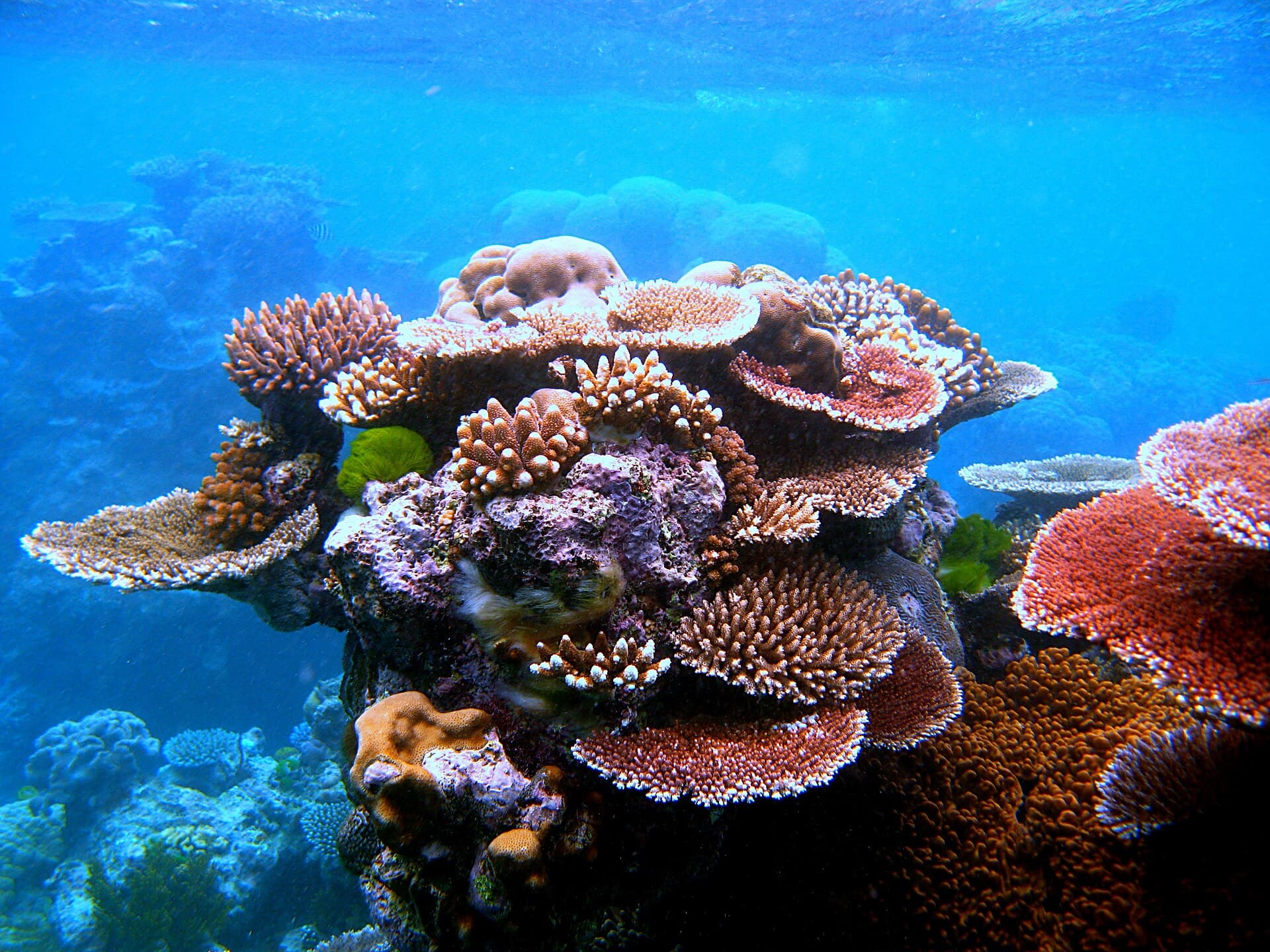
Tropical North Queensland
The Reef is 2,300 kilometres — pick a harbour
Cairns, Port Douglas, and the Whitsundays run different days. Stinger suits in season are normal. Inner pontoons and outer ribbon reefs are not the same trip.
- Reef system length
- ~2,300 km
- Common dry window
- Jun–Oct
- Typical stinger season
- Nov–May
- First stay
- 3–7 days
The best time to visit the Great Barrier Reef, for many travellers in the far north, is the drier, clearer window around June to October. Stinger season typically runs November to May — wear the suit. Choose a launchpad first: Cairns and Port Douglas for the northern reefs and the Daintree; Airlie Beach and the Whitsundays for Whitehaven and island time.
Definition
Great Barrier Reef. A vast system of reefs and islands off Queensland, protected as a marine park — not a single coral garden you “complete” in one boat day.
The Great Barrier Reef is a marine-park system more than 2,300 kilometres long. You tour a launchpad — Cairns, Port Douglas, Airlie Beach and the Whitsunday islands — not “the Reef” as one pontoon you complete. Zoning decides where boats may snorkel, fish, or anchor. Tour vessels operate under permits. That is the useful sentence. GBRMPA is the manager to verify. “Pristine” and “best operator” are marketing.
This page sits under the destinations hub. It is the usual tropical counterpart to Uluru on a first long Australian trip, and it is the northern chapter of an east-coast fortnight that starts with Sydney and the Blue Mountains. It is not Ningaloo.
How many days
One day from a cruise ship or a tight city connection: take the boat, not the botanic gardens. You cannot recreate a coral garden on land. Accept that you will not also do the Daintree properly.
Two or three days is the first stay that feels like Tropical North Queensland rather than a transfer: one dedicated reef day, one rainforest or Kuranda day (or a second marine day if the first is cancelled), and enough sleep to wear a stinger suit without falling over.
Four to seven days is when a buffer for wind becomes real, Port Douglas can be a base instead of a day-trip, or the Whitsundays can include an island night instead of a single Whitehaven raid.
Stay at one harbour. Cairns plus Port Douglas plus Airlie Beach in the same six nights is a transfer diary, not a reef trip.
| Days you have | Honest plan | What to drop |
|---|---|---|
| 1 | Licensed reef boat from your actual marina | Daintree, Kuranda, island overnight |
| 2–3 | Reef day + forest or island day + slack | A second climate (Uluru, Tasmania) |
| 4–7 | One launchpad, buffer, optional island night | Collecting every Queensland marina |
Fly-in fly-out from Sydney or Melbourne for a single reef day is possible and tiring. If the fortnight is an east-coast sampler, protect the boat day the way the two-week itinerary tells you to: book it before you book the third harbour walk.
City-side logistics for the far north live on from Cairns. Use that page when the question is “reef or rainforest tomorrow”, and use this page when the question is which Queensland week you are even taking.
Season
June to October is the period many guides call the dry in Tropical North Queensland — lower humidity, more stable boat days, and a common window for visibility. It is not a guarantee of glass water. Winter south-easters still cancel trips. Build a buffer day.
November to May is the typical stinger (box jellyfish and Irukandji) season along much of the far-northern coast. Operators issue stinger suits. Wear them. This is educational framing, not a medical claim: follow the briefing and local signage. Inland waterfalls and creeks have their own seasonal risks.
The wet season can still offer reef days between systems. It also offers cancelled boats and cyclone awareness. Do not write a same-day international connection after your only booked pontoon.
Coral bleaching events have occurred in recent years. That is a scientific and management fact, not a reason to invent a “dead reef” headline or a “last chance” sales pitch. Ask operators what sites they are using this week. GBRMPA and the permit system exist because the park is managed, not because a brochure needs a tragedy.
Compare the calendar with the other first-timer climates on the destinations hub. Cooler months (about April–September) favour Uluru. Tasmania’s walking season is roughly December–April — overlapping the far-north wet and stinger window, which is why a Tassie summer and a Cairns week are different trips, not a combo meal. Kakadu is a dry-season park (about May–October), closer in month to a mid-year reef window than to a Hobart summer, but it is still a different airport and a crocodile briefing.
Getting there
Pick the airport that matches the holiday, then stop adding marinas.
Cairns is the classic far-northern door: reef boats, airport volume, and road access toward the Northern Beaches, Palm Cove, and Port Douglas. Green Island and Fitzroy Island are closer island products; outer ribbon reefs are longer days. Neither is automatically “better”. Seas decide.
Port Douglas is a road transfer north of Cairns, not a second international airport. It shortens the Daintree and Cape Tribulation story and uses a different marina rhythm. It is not automatically more luxurious; it is closer to the forest and still a boat ride from coral.
Airlie Beach, Proserpine, and Hamilton Island open the Whitsundays: Whitehaven’s silica beach, sailing, hill inlets, and reef snorkel that may be a half-day rather than an outer-ribbon expedition. Overnight on an island if the calendar allows. Day-return sailing is still a full day.
Domestic flights from Sydney or Melbourne are how first-timers actually arrive. Driving the entire coast from the harbour to Cairns is a holiday of its own; it is not how you protect a snorkel day inside a fortnight. The east-coast sketch flies at least one long gap.
From Brisbane the reef is still a northbound flight or a much longer coast. Moreton and the sand islands are different marine days. Do not substitute them for the Reef in copy or in your own head without noticing.
We do not publish fares, levies, or live departure times. Ask about the marine-park levy, wetsuit or stinger-suit hire, lunch, and the cancellation rule when wind exceeds the skipper’s limit.
What a first visit looks like
A first visit has a harbour rhythm, not a continent rhythm.
You sleep near the marina or the island jetty. You check the weather like a local, which means you have a spare day. You take one licensed boat to a permitted site — inner pontoon, island reef, or outer ribbon — and you treat the briefing as the trip, not as a delay. You wear the suit in stinger season. You do not invent your own “secret reef” from a map.
If you are in the far north with a second day, you go inland or up the cape road: Daintree, Cape Tribulation, or Kuranda if motion sickness or wind wins. That pairing is why Port Douglas exists as a base. It is also why from Cairns tells you not to treat reef-versus-forest as a personality test.
If you are in the Whitsundays, the first visit may look like a beach and boat holiday that includes coral, rather than a coral expedition that includes a beach. Whitehaven is the photograph people already have. An island night is the difference between seeing it and staying in it.
What the first visit does not include: a ranking of pontoons, a guarantee of turtles on cue, or a same-week flight to Yulara unless you have about three weeks and you already accepted a second climate. Uluru or the Reef first is answered on the Uluru page as weather, not as prestige.
Luxury small boats and large day cats use the same marine park. They do not buy a zone exception. Read luxury only as a logistics conversation — quieter transfers, different inclusions — not as a quality score for coral.
Practical park notes
The Great Barrier Reef Marine Park is zoned. That is why two boats from the same harbour can offer different days. Verify restrictions and permit context with GBRMPA and with the operator who holds the permit. This site does not publish live site lists.
Stinger suits in the typical November–May far-northern window are standard operating practice on many boats. Wear what you are given. Inland freshwater swimming has separate seasonal advice; follow local signage rather than a swimming hole on social media.
Seasickness is a planning fact on outer days. If you know you are miserable on swell, say so when you book and consider a closer island product. That is not a ranking; it is how you still see coral.
Marine-park levies and gear hire appear on invoices. Ask. We do not invent the number.
Island national parks and mainland rainforest parks sit with Queensland parks services as well as with the marine-park manager. Cape Tribulation roads, ferry weather to islands, and walking-track closures are the week’s facts, not this page’s live feed.
If you will snorkel or dive, you already know to use licensed operators and to follow their medical and safety briefings. This site does not offer medical advice and does not rank dive shops.
Cyclone season awareness is part of wet-season travel in the north. Build flexibility. Travel insurance conversations belong with your insurer, not with an editorial itinerary.
What to skip
Skip collecting harbours. Skip a second reef operator “just in case” — pick one licensed boat and keep the buffer day. Skip stacking a Daintree day, an outer-ribbon day, and a Kuranda railway onto a single clock. Skip treating Ningaloo as the same ticket; it is a west-coast marine park with days of driving from Perth, or a flight into Exmouth.
Skip adding Uluru to a ten-day east-coast trip. You can add a flight and lose a coast. A cleaner move is the east-coast fortnight intact, and the Red Centre on another visit or a third week.
Skip “last chance to see the Reef” copy. Management, bleaching science, and site choice are real; panic pricing is a sales pitch.
Skip swimming off an unsigned mainland beach in stinger season because the hotel pool made you complacent. Skip touching coral. Skip assuming an inner pontoon is a failed version of an outer ribbon — they are different days for different swell and fitness.
Skip writing Tasmania into the same week. Tasmania wants seven to ten days and a walking season that sits in the far-north wet. The destinations hub exists so you do not merge those calendars.
Related regions and itineraries
Parent index: destinations.
Sibling climates people actually compare: Uluru and the Red Centre (cooler-month desert, climb closed 26 October 2019, Alice about 450 km / 4.5 hours on the sealed road) and Sydney and the Blue Mountains (the harbour-and-highland start of many east-coast tickets).
Launchpad for the far-north day layer: from Cairns.
Sample loop that includes a reef harbour: east coast, two weeks.
If the west-coast reef is the curiosity, that is Perth and the Coral Coast — Ningaloo is not a Great Barrier Reef day trip. If Melbourne cliffs are the other open tab, that is the Great Ocean Road, a different ocean and a different clock.
Which reef launchpad?
| Compare | Cairns / Port Douglas | Whitsundays / Airlie |
|---|---|---|
| Typical day | Outer or inner reef pontoon or island (Green, Fitzroy) | Whitehaven, hill inlets, reef or island snorkel |
| Pairing | Daintree, Cape Tribulation, Kuranda | Island nights, sailing, Airlie town |
| First-timer fit | Classic “see coral” day plus rainforest | Beach and boat time with optional reef |
| Wet / stinger note | Far-north stinger season and monsoonal wet | Still tropical; check local marine warnings |
Questions
What travellers always ask
Many visitors prefer June to October in the far north for drier weather and clearer days. Stinger season is typically November to May — suits are standard. Cyclone awareness belongs to the wet. Always verify the week you travel.
Sibling regions
Other hubs that share a first-timer shortlist
Every destination child links up to the hub and across to nearby climates. Do not add all three this fortnight.
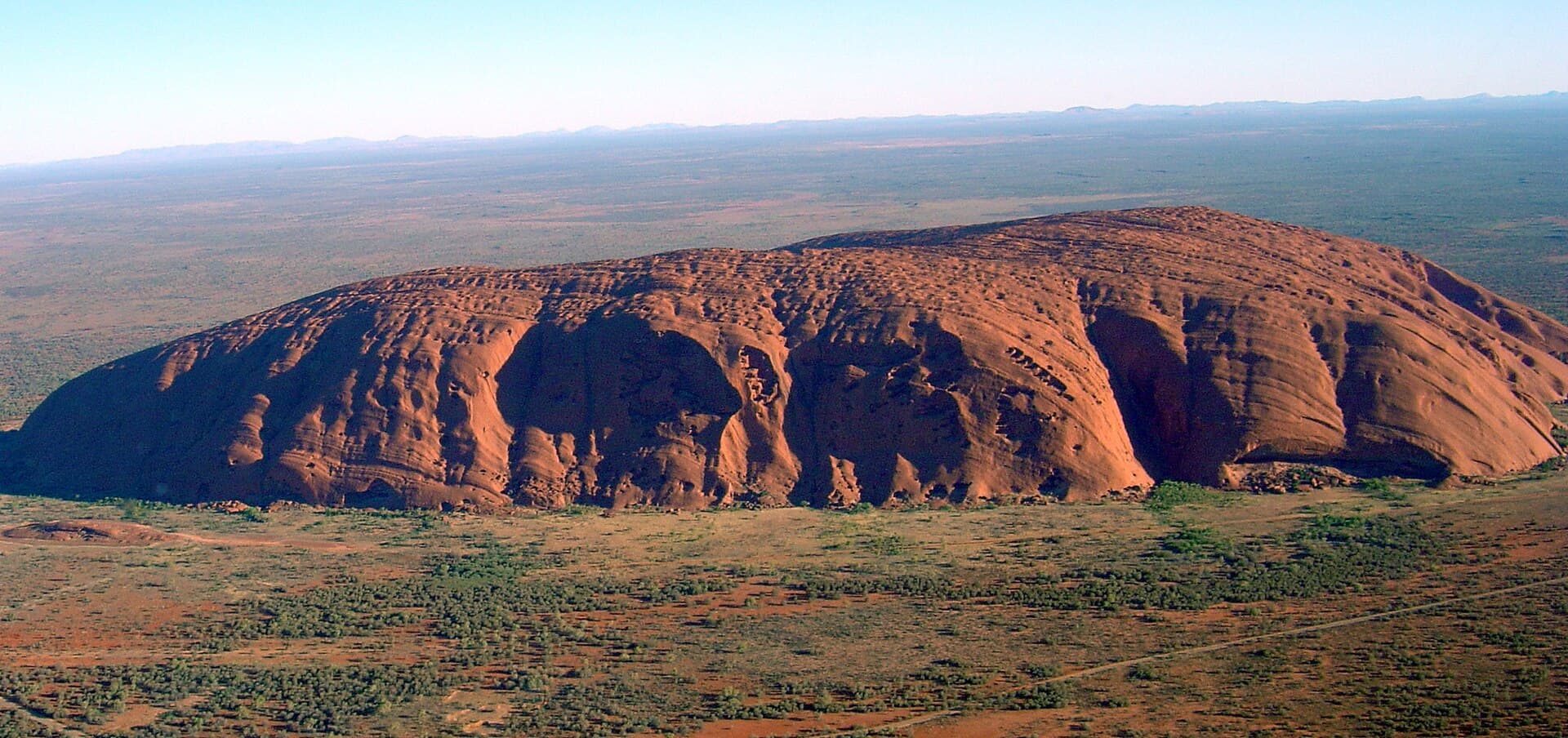
Outback
Uluru & the Red Centre
Three to four days around Uluru, Kata Tjuta and Kings Canyon — cooler months, closed climb, and why Alice and Yulara are different bases.
Learn more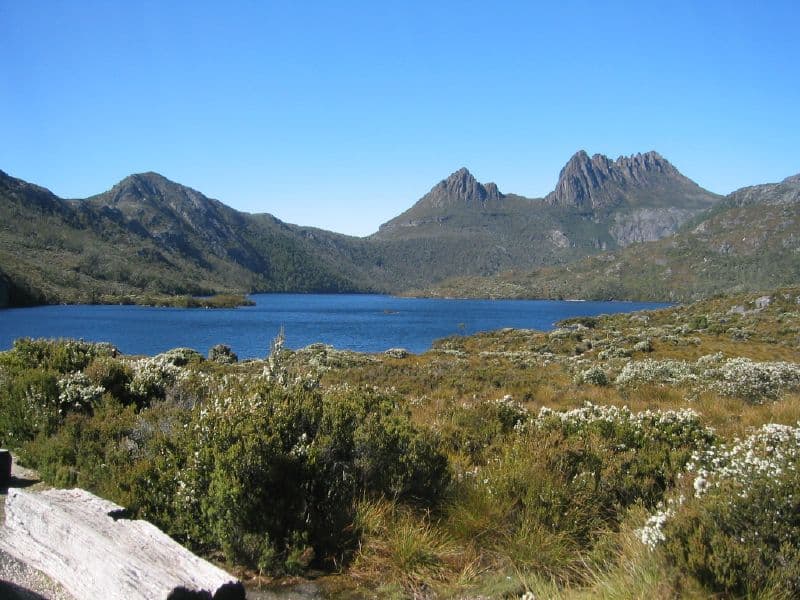
The island
Tasmania
Seven to ten days is the honest first loop: Hobart, Freycinet, Cradle Mountain, and a ferry or a flight from the mainland.
Learn more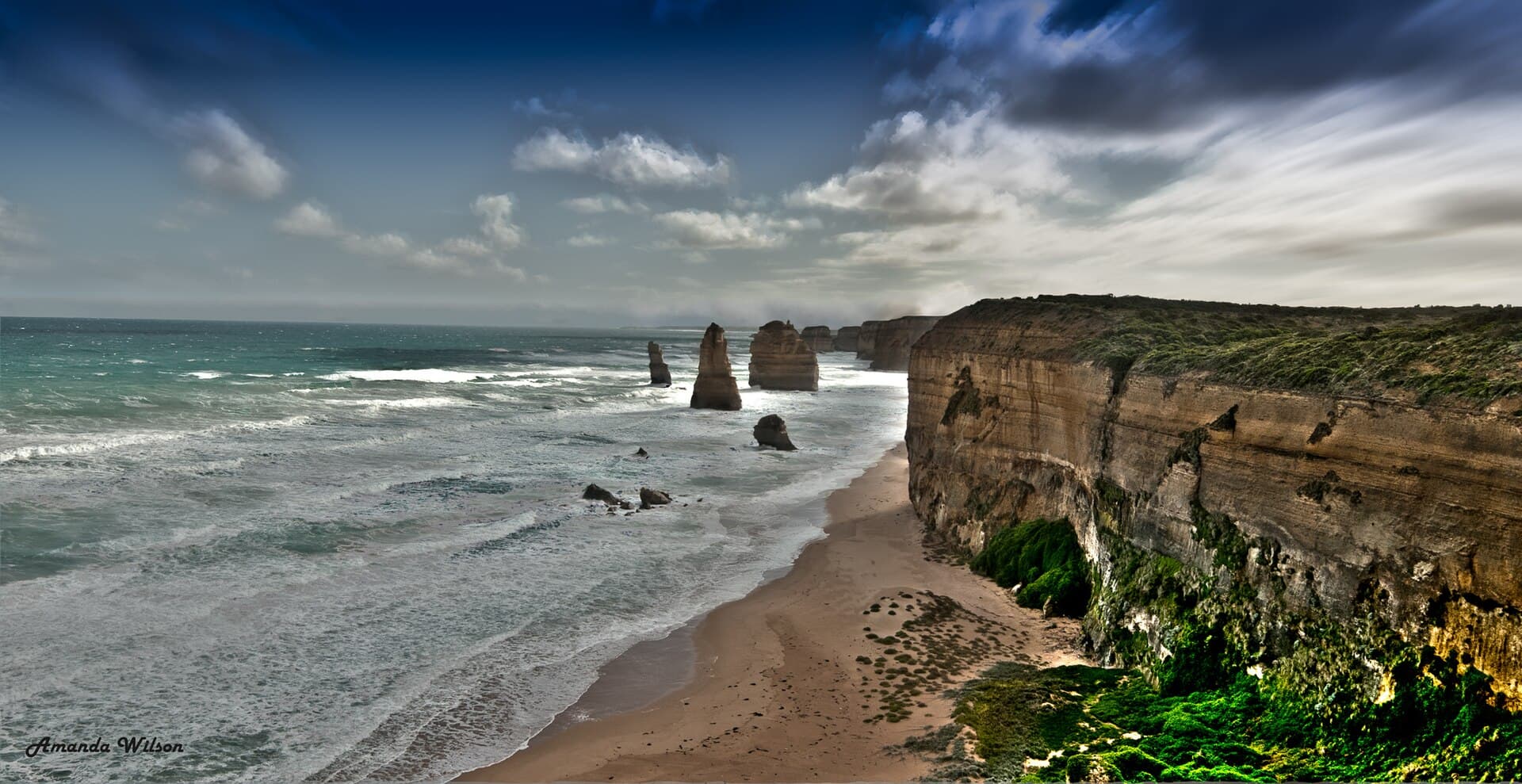
Victoria
Great Ocean Road
A long Melbourne day trip can reach the Twelve Apostles. An overnight in Apollo Bay or Port Campbell is the trip people mean.
Learn morePair the Reef with a coast, not a continent
If this is your Queensland week, read the Cairns launchpad and the two-week east-coast itinerary. If you are still choosing Uluru, compare seasons first.