Complete guide
Australia tours: how to choose the right tour for your trip
Our hub for planning tours in Australia: the main tour styles, how to match a tour to your days and the season, which regions suit guided touring and which suit self-drive, and in-depth guides to choosing an operator, Uluru from Alice Springs, Tasmania, multi-day trips from Sydney and touring at a gentler pace.
Published
Australia is a continent-sized country, and that changes how tours work here. A "tour of Australia" is rarely one tour. It is usually a short chain of regional experiences joined by domestic flights: a reef trip out of Cairns, a few days in the Red Centre, a coastal drive in Victoria, perhaps a week in Tasmania. This hub explains how to choose the right kind of tour for each of those pieces, and links to our in-depth guides.
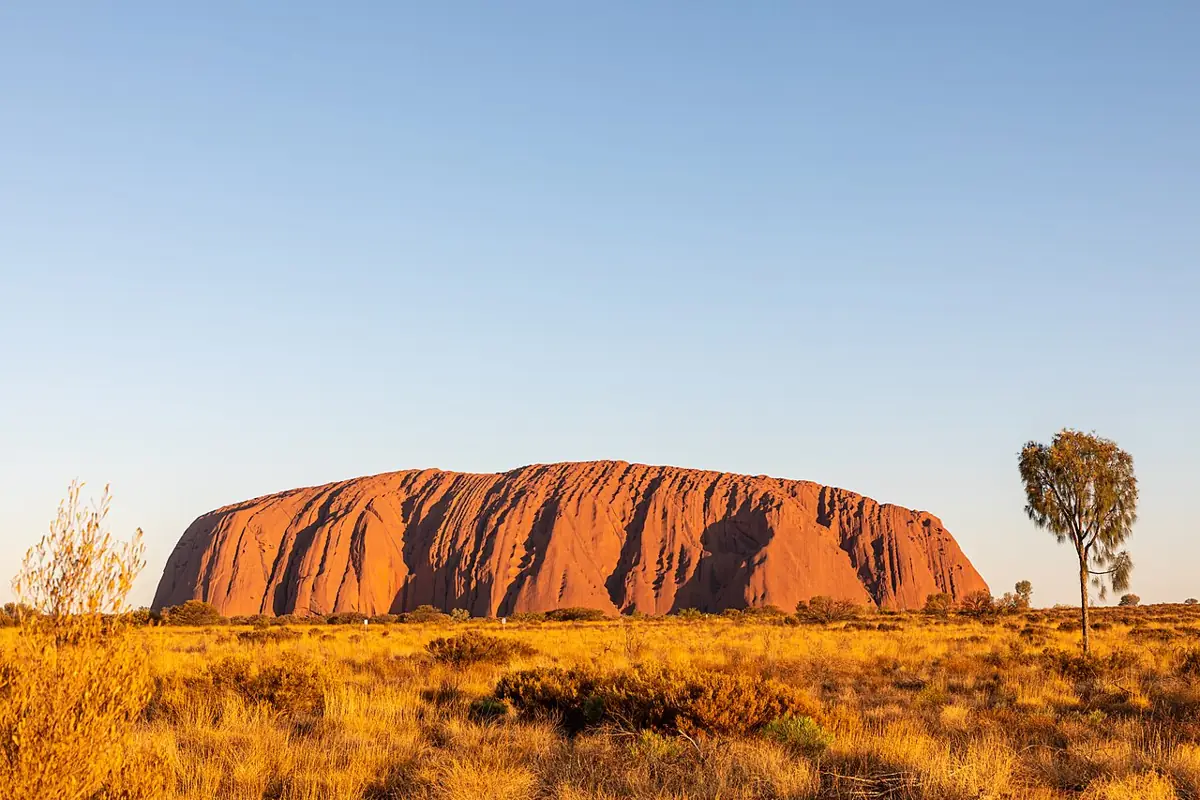
Photo: Petermann Ranges (AU), Uluru-Kata Tjuta National Park, Uluru -- 2019 -- 3688.jpg by Dietmar Rabich, CC BY-SA 4.0, via Wikimedia Commons.

We do not sell tours, rank operators or publish live prices. Prices, departures and inclusions change too often for a static guide to stay accurate, so we focus on the decisions that stay true from year to year: which style of tour suits which region, how many days each region really needs, and what to check before you pay a deposit.
Start with your days, not a list of tours
The most common planning mistake is to choose tours first and discover later that they do not fit together. Start with the number of days you have on the ground, then decide how many regions you can visit without spending half the trip in airports.
- 7 to 10 days: one or two regions. For example, Sydney with a Blue Mountains day, then the Reef from Cairns.
- About two weeks: two or three regions, often a city, the Reef and either the Red Centre or a coastal drive.
- Three weeks or more: three or four regions at a sensible pace, with room for Tasmania, the Top End or Western Australia.
Our sample itineraries show how these combinations fit together day by day, and the guide to multi-day tours from Sydney covers the most common starting point.
The main styles of tour in Australia
Most tours sold in Australia fall into a handful of styles. Understanding them makes operator websites much easier to compare.
Day tours
A day tour leaves in the morning and returns the same evening. Day tours work well where the highlight is within a few hours of a city: the Blue Mountains from Sydney, the Great Ocean Road from Melbourne (a long day), the Daintree from Port Douglas, or the outer Reef from Cairns. Read our overview of day tours for the realistic options from each gateway.
Small-group multi-day tours
These usually carry somewhere around a dozen to two dozen guests in a minibus or four-wheel drive, with a guide who also drives. They are the most popular way to visit remote regions such as the Red Centre, Kakadu and the Kimberley, because the guide handles long distances, park rules and camp or lodge logistics. Accommodation ranges from swags and permanent tents to motels and lodges.
Coach tours and escorted holidays
Larger coach tours and fully escorted holidays cover more ground with more inclusions: hotels, many meals, transfers and sometimes domestic flights. They suit travellers who want everything arranged and are comfortable with a fixed schedule. Our guide to touring at a gentler pace explains what to look for if comfort and pacing matter most.
Self-drive and "fly-drive" packages
A self-drive package bundles a hire car or campervan with pre-booked accommodation and a suggested route. It is a good fit for Tasmania, the Great Ocean Road, the south-west of Western Australia and parts of the east coast. It is a poor fit for unsealed outback tracks unless you have the right vehicle, insurance and experience. See self-drive for the trade-offs.
Specialist and private tours
Private guides, Aboriginal-owned cultural experiences, wildlife tours, food and wine tours, walking tours and scenic flights sit alongside the main styles. These are often the most memorable part of a trip, and many can be added to a self-drive or city stay.
Which regions suit guided tours, and which suit self-drive
| Region | Usually best as | Why |
|---|---|---|
| Uluru and the Red Centre | Guided multi-day tour, or fly in and join local tours | Long distances between sights, heat, and park logistics |
| Great Barrier Reef | Licensed reef-trip operator | You need a boat, and operators run under Marine Park permits |
| Kakadu and the Top End | Guided tour in the dry season | Seasonal road closures and crocodile country |
| Tasmania | Self-drive or small-group tour | Compact, sealed main roads, but weather and wildlife at dusk |
| Great Ocean Road | Self-drive with an overnight, or a long day tour | Winding road that rewards a slower pace |
| Sydney and Blue Mountains | Independent, plus a day tour | Good public transport and short distances |
These are general patterns, not rules. Experienced drivers with the right vehicle self-drive the Red Centre every year; plenty of visitors take guided tours in Tasmania. The point is to match the style to the conditions.
Matching a tour to the season
Australia's seasons vary by region, and the "best" time for one tour can be the worst for another.
- The tropical north (Cairns, the Daintree, Kakadu, the Kimberley) has a dry season in the middle of the year and a wet season in summer, when some roads and parks close and marine stingers are present.
- The Red Centre is most comfortable in the cooler months. Summer days are very hot and some walks close early in the day for safety.
- The south (Melbourne, the Great Ocean Road, Tasmania, Adelaide) is mild to warm in summer and cool to cold in winter, with shorter days.
Operators adjust their schedules around these patterns. Before booking, check what the tour does in heat or rain, whether walks may be cancelled, and what happens to your booking if a road closes.
How to compare tour operators
When two tours look similar, the details decide which is better for you. Our full checklist is in how to choose an Australia tour, but the essentials are:
- Group size and vehicle. Smaller groups usually mean more flexibility and better access to walks.
- Time on the ground versus time on the road. Compare the driving times with the activities.
- Inclusions. Park passes, meals, entry fees and accommodation type vary widely.
- Guide expertise. Look for interpretation of Country, geology and wildlife, not just driving.
- Terms and conditions. Read the cancellation, refund and weather policies before paying.
Australian Consumer Law gives you rights when services are not provided as described. The ACCC's travel guidance explains these rights.
Respecting Country on tour
Many of Australia's most famous places are Aboriginal land, and several national parks are jointly managed with Traditional Owners. Good operators explain the cultural significance of places, follow requests not to photograph certain sites, and keep to marked paths. At Uluru, climbing has been closed since 2019 at the request of the Anangu Traditional Owners. Choosing Aboriginal-owned or Aboriginal-guided experiences is a direct way to support communities and learn from the people whose Country you are visiting.
Our in-depth tour guides
- How to choose an Australia tour: an operator checklist covering group size, inclusions, guides and booking terms.
- Uluru tours from Alice Springs: day trip or three days, Kings Canyon, and what a classic loop involves.
- Tasmania tours: how many days you need: four, seven, ten and fourteen-day shapes.
- Multi-day tours from Sydney: the Blue Mountains, the Hunter, the south coast, Canberra and beyond.
- Australia tours at a gentler pace: pacing, comfort, accessibility and health planning.
- Australia tours FAQ: twenty direct answers to the questions travellers ask most.
Before you book
Write down the days you have, the regions you most want to see and the season you will travel. Then choose one tour style per region. That simple order of decisions prevents most of the problems we see: overpacked itineraries, tours that clash with flights, and long drives that eat into the experiences you came for.
All guides in this series
- How to choose an Australia tour: a practical operator checklist — A step-by-step checklist for comparing tours in Australia: group size, vehicles, pacing, inclusions, accommodation, guides, permits, reviews and booking terms, plus the questions to ask an operator before you pay a deposit.
- Uluru tours from Alice Springs: day trip or three days? — How tours from Alice Springs to Uluru work: the distance and driving time, why a day trip is possible but rushed, what a classic three-day loop with Kata Tjuta and Kings Canyon involves, the best time of year, park passes and how to choose between touring from Alice Springs and flying to Yulara.
- Tasmania tours: how many days do you need? — How long to spend on a Tasmania tour: what fits into four, seven, ten and fourteen days, guided tours compared with self-drive, getting to Tasmania by air or ferry, driving times between the main regions, seasons and how to plan around weather and wildlife.
- Multi-day tours from Sydney: where to go in two to five days — The best regions for short multi-day tours from Sydney: the Blue Mountains, the Hunter Valley, Port Stephens, the South Coast and Jervis Bay, Canberra and the Snowy Mountains, with rough travel times, what each trip suits, and how to fit them around a longer Australia itinerary.
- Australia tours at a gentler pace: planning for seniors and slower travellers — How to plan a comfortable tour of Australia if you prefer a gentler pace: choosing tour styles, pacing long distances, accessible regions and experiences, health and medication planning, insurance, heat and sun, and the questions to ask operators about mobility and comfort.
- Australia tours FAQ: 26 questions to ask before booking — Direct answers to the questions travellers ask most about tours in Australia: how to choose, how many days, the best time to go, tour styles, park passes, self-drive, Aboriginal-guided tours, older travellers, insurance and booking terms.
Frequently asked questions
What is the best type of tour for a first trip to Australia?
For most first-timers, a mix works best: a guided small-group or multi-day tour for remote regions such as the Red Centre or the Top End, and independent travel or day tours in the cities and along well-signed coastal drives.
How far ahead should I book an Australia tour?
Popular multi-day departures in peak seasons, such as the Red Centre in the cooler months and the Reef in the dry season, can fill early. Booking a few months ahead gives you more choice; day tours can often be booked closer to the date.
Are guided tours better than self-drive in Australia?
Neither is better everywhere. Guided tours remove long remote driving, add interpretation and handle park logistics. Self-drive suits shorter, sealed coastal routes such as the Great Ocean Road or Tasmania's east coast.
Can I combine several tours in one trip?
Yes. Many travellers string together a city stay, a reef day trip, a three-day Red Centre tour and a self-drive leg. Leave a buffer day around flights to remote regions.
How do I check a tour operator is legitimate?
Look for a clear business name and ABN, a physical contact address, published terms and cancellation conditions, and, for national parks and the Reef, evidence that the operator holds the relevant permits.