Guide
Uluru tours from Alice Springs: day trip or three days?
How tours from Alice Springs to Uluru work: the distance and driving time, why a day trip is possible but rushed, what a classic three-day loop with Kata Tjuta and Kings Canyon involves, the best time of year, park passes and how to choose between touring from Alice Springs and flying to Yulara.
Published
Alice Springs sits close to the centre of Australia, and most visitors assume Uluru is next door. It is not. Uluru is a long drive south-west of town, and that single fact shapes every tour that leaves from Alice Springs. This guide explains how those tours work, how many days you really need, and how to decide between touring from Alice Springs and flying directly to Yulara, the resort village near Uluru.
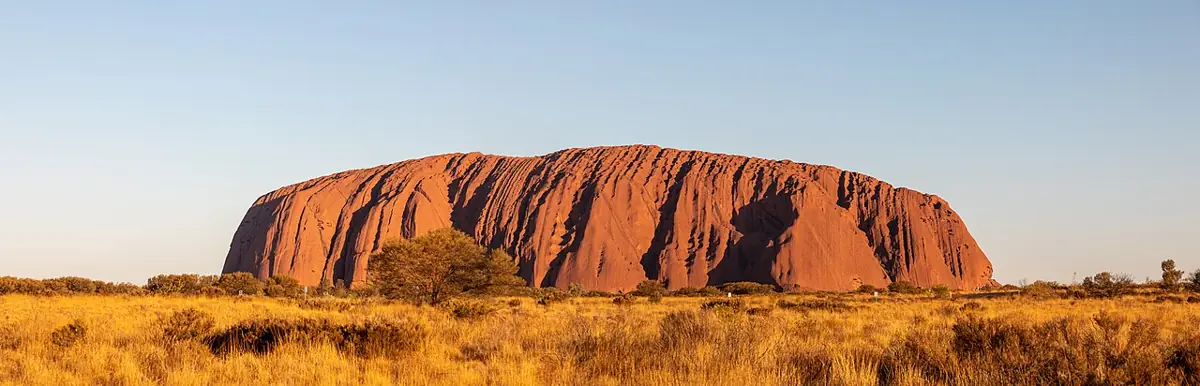
Photo: Petermann Ranges (AU), Uluru-Kata Tjuta National Park, Uluru -- 2019 -- 3679-83.jpg by Dietmar Rabich, CC BY-SA 4.0, via Wikimedia Commons.

We do not sell tours or publish prices. Check current departures, inclusions and conditions with operators and with Parks Australia before you travel.
How far is Uluru from Alice Springs?
Uluru is roughly 450 kilometres from Alice Springs by road. The usual route follows the Stuart Highway south, then the Lasseter Highway west to Yulara. Both are sealed. Allow about four and a half to five hours of driving each way, plus fuel and rest stops at roadhouses.
Kings Canyon, in Watarrka National Park, lies to the north-west of Uluru. Many tours visit it on the way out or back, which turns the trip into a loop.
| Leg | Typical approach |
|---|---|
| Alice Springs to Uluru (Yulara) | Sealed highways, about 4.5 to 5 hours |
| Uluru to Kings Canyon | Sealed roads, roughly half a day with stops |
| Kings Canyon to Alice Springs | Sealed via the highways, or the unsealed Mereenie Loop, which needs a permit and suitable vehicle |
Driving times are approximate. Check NT road conditions before travelling, especially after rain.
Is a day trip from Alice Springs worth it?
A day trip is possible, and some operators offer one, but it is a very long day: an early start in darkness, most of the daylight hours in a vehicle, a short time at Uluru and Kata Tjuta, and a late return. You are likely to miss the slower experiences that make Uluru special, such as walking around the base at sunrise, the cultural centre, and watching the colours change at sunset without checking the time.
A day trip makes sense only if you have no other option. If you have even one more day, an overnight tour or a flight to Yulara will give you a far better visit.
The classic three-day loop
The most popular tour from Alice Springs is a three-day loop. Exact itineraries vary, but a typical shape looks like this.
Day 1: Alice Springs to Uluru
An early departure south along the Stuart Highway, with roadhouse stops and often a view of Atila (Mount Conner), a flat-topped mesa that some visitors mistake for Uluru. Arrive in the afternoon, visit the Uluru-Kata Tjuta Cultural Centre, walk part of the Uluru base, then watch sunset.
Day 2: Kata Tjuta and on to Kings Canyon
Sunrise at Uluru, then a walk at Kata Tjuta, such as the Walpa Gorge walk or part of the Valley of the Winds. In the afternoon, drive towards Kings Canyon and camp or stay nearby.
Day 3: Kings Canyon and back to Alice Springs
An early start for the Kings Canyon Rim Walk, which climbs steeply at first and then loops around the canyon rim past the Garden of Eden waterhole. On hot days, parts of the walk may close early, which is one reason tours start at dawn. Then drive back to Alice Springs, usually arriving in the evening.
Longer tours: four days or more
Four- and five-day tours often add the West MacDonnell Ranges (Tjoritja) near Alice Springs, with gorges and waterholes such as Simpsons Gap, Standley Chasm, Ormiston Gorge and Glen Helen. Longer tours give you more time at each place and fewer pre-dawn starts. They suit travellers who want to walk more, or who would like to see the Red Centre beyond Uluru.
Our Outback 7 days itinerary shows how a week in the Red Centre fits together.
Touring from Alice Springs or flying to Yulara?
Both work. The right choice depends on your route and how you feel about long drives.
| Option | Good for | Trade-offs |
|---|---|---|
| Tour from Alice Springs | Seeing the landscape between sites, combining Kings Canyon, the West MacDonnells and town | Long driving days |
| Fly into Yulara | Maximising time at Uluru, travellers short on days | You miss the drive and need separate plans for Kings Canyon |
| Fly in, tour out | One-way tours from Yulara to Alice Springs via Kings Canyon | Fewer departures; check one-way options |
If you fly to Yulara, local tours from the resort cover sunrise, sunset, the base walk, Kata Tjuta and cultural experiences.
When to go
The Red Centre is a desert. The cooler months, roughly April to September, are the most comfortable for walking, though nights can be cold, and frost is possible in mid-winter. Summer days are very hot, and Parks Australia closes some walks at Uluru and Kata Tjuta from early in the day when high temperatures are forecast. Flies can be intense in warmer months, so a fly net is worth packing.
Rain is infrequent but can be heavy. After storms, waterfalls can appear on Uluru, and some roads may close. Check the Bureau of Meteorology forecast and Parks Australia alerts before you go.
Park passes and respect for Anangu
Every visitor to Uluru-Kata Tjuta National Park needs a park pass, available from Parks Australia. Many tours include it, so check before buying separately. The park is jointly managed by Anangu Traditional Owners and Parks Australia.
Climbing Uluru has been closed since October 2019. Some areas around the base are sacred, and signs ask visitors not to photograph them. A good guide will explain why and help you understand the Tjukurpa (Anangu law and culture) connected to the places you visit. The Cultural Centre is a good first stop on any tour.
What to pack for a Red Centre tour
- broad-brimmed hat, sunscreen and sunglasses
- at least two to three litres of water capacity per person for walks
- sturdy walking shoes with good grip
- warm layers for cold mornings and nights in winter
- a fly net in warmer months
- a torch or headlamp if you are camping
Your operator will send a specific packing list, especially for camping tours.
Choosing a Red Centre tour
When comparing tours, look at group size, accommodation type (camping, permanent tents or lodges), how many sunrises and sunsets are included, whether park passes are included, and whether any walks are led by Anangu guides. Our operator checklist covers these questions in detail, and the Uluru and Red Centre page has more on the region itself.
Frequently asked questions
Can you do a day trip from Alice Springs to Uluru?
Yes, some operators run very long day trips, but Uluru is roughly 450 kilometres from Alice Springs by road, so most of the day is spent driving. Most travellers find two or three days far more rewarding.
How long is the drive from Alice Springs to Uluru?
Allow roughly four and a half to five hours each way on sealed highways, plus stops. Drive in daylight where possible because wildlife and livestock are on the roads at dawn and dusk.
How many days do I need to see Uluru?
Two full days at Uluru-Kata Tjuta covers a sunrise, a sunset, the Uluru base walk or part of it, and a walk at Kata Tjuta. Add a day or more for Kings Canyon.
What is the best month to go to Uluru?
The cooler months from about April to September are the most comfortable for walking. Summer can be extremely hot, and some walks close early on hot days.
Do I need a park pass for Uluru on a tour?
Every visitor to Uluru-Kata Tjuta National Park needs a park pass. Many tours include it; check your inclusions, and if not, buy it from Parks Australia.