Tour styles
Small-group is a vehicle size, not a halo
Better for parks and outback logistics. Redundant for a ferry you could board yourself.
- Maximum pax
- Ask
- Where it shines
- Parks
- Editorial rule
- Not ranked
- Meals, swags, passes
- Inclusions
Is a small-group tour better for first-timers? Often yes in the Red Centre, Kakadu, and on trips that would otherwise demand a 4WD and a permit education. Often no for a Blue Mountains or harbour day you can do by train or ferry. “Small” should be a number on the booking — ask for maximum group size, not an adjective.
Definition
Small-group tour. A licensed departure with a low guest-to-guide ratio, usually in a van or 4WD, as opposed to a large coach circuit.
Small-group marketing loves words like “authentic”. The useful questions are boring: how many seats, whose country, which roads, what is excluded. A small-group tour is a licensed departure with a low guest-to-guide ratio, usually in a van or 4WD. It is not a halo. It is not a ranking. It is a vehicle size that helps in some Australian regions and wastes money in others.
This page sits under tour styles. We do not publish a leaderboard of operators.
Where small-group earns its keep
The Red Centre is the clearest first-timer case. Sunrise timing, a parks pass, heat, and commentary on Anangu country are logistics most people would rather not improvise after a long-haul. You still do not need a 4WD for the sealed Lasseter and Luritja circuit. You may still want a van so someone else drives and briefs. The calendar is the outback week.
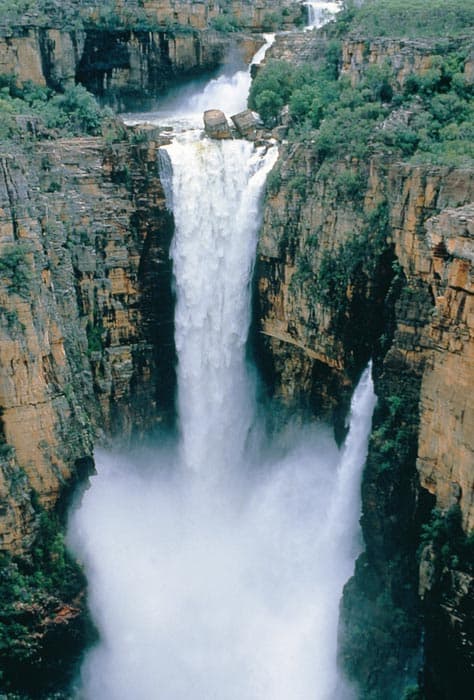
Kakadu and the Top End reward a guide who knows which road is open, which boat runs, and which rock-art site is the one you actually have time for. Wet-season closures are not a rumour. Crocodile briefings are not optional theatre. Read Kakadu and the Top End.
4WD country — remote Western Australia, some Cape trips, unsealed alternatives — is where a small-group 4WD is often the product, not a style upgrade. Do not hire a shiny four-wheel-drive in a city and invent the track. That argument continues on self-drive versus guided.
Where it is optional
A Sydney harbour ferry, a Bondi-to-Coogee walk, and many Blue Mountains days can be done by train, public bus, or a standard day tour. A small-group van can be more comfortable. It is not automatically more meaningful. If the highlight is a few hours from the city, start with the launchpads — Sydney, Melbourne, Cairns — and only pay for a smaller vehicle if the inclusions justify it.
First-timers who hate driving on the left often enjoy a van in Tasmania or on the Great Ocean Road. That is comfort, not moral high ground. The ten-day Tasmania itinerary still assumes you may self-drive; a small-group circuit is the alternative if you refuse the hire desk.
Ask for a number, not an adjective
“Small” should be a maximum passenger count on the booking. Ask for it. Ask whether parks passes are included. Ask tent versus lodge or swag. Ask walking grade — Kings Canyon rim is not a jetty stroll, and neither is Valley of the Winds on a hot morning. Ask the cancellation rule when a road closes or a boat is cancelled.
Luxury products overlap when the group is very small and the beds are lodges. Adventure products overlap when the walk or the track is the point. Neither word replaces the number of seats.
What is usually in the van — and what is not
East-coast “hopper” small-groups stitch hostels and beaches between Sydney and Cairns. They can be social and cheap-feeling. They are still a timetable. If the reef day is the reason you came, confirm whether the boat is included or a pay-extra morning that collides with a 6 a.m. checkout.
Red Centre and Kakadu departures more often include camping or lodge nights, meals, and a parks pass — or they more often exclude them. Swag camping is a canvas bed on the ground, not a hotel. Ask which. Ask whether sleeping bags, drinking water, and walking poles are yours to bring. Adventure grades still apply when the brochure says “optional rim walk”.
A guide who names whose country you are on is doing the job. A guide who treats the rock as a sunset prop is not. We cannot audit that from this page. You can ask, on the phone, how cultural briefings actually run.
Coach circuits still exist
Large coaches stitch the east coast and some Red Centre loops. They can work on sealed roads if you accept a timetable. They are usually cheaper upfront and less flexible. They will not wait at Wineglass Bay. They can still be licensed, safe, and well guided. Small-group is not a moral victory over a coach. It is a different ratio.
Quality varies in both formats. We do not invent ratings. Confirm licence and inclusions. Official park rules live with the parks service.
Planning table
| Trip type | Small-group helps? | Why |
|---|---|---|
| Uluru / Kings Canyon week | Often | Heat, sunrise, cultural briefing, shared driving |
| Kakadu dry or wet | Often | Roads, boats, country knowledge |
| Remote 4WD / Cape / remote WA | Usually | The vehicle is the access |
| Tassie triangle / Ocean Road | Comfort | Optional if you will not self-drive |
| Harbour, ferry, city walk | Rarely | You can board yourself |
Buy the guide, not the hashtag. If the trip is a city day, look at day tours. If it is the Centre or Kakadu, look at the destination page, then ask operators the boring questions — and stay off tracks your hire contract already forbade.
Small-group vs big coach
| Compare | Small-group | Large coach |
|---|---|---|
| Flexibility | Higher, still not private | Timetable-led |
| Price | Usually higher | Usually lower |
| First-timer outback | Often worth it | Can still work on sealed circuits |
Questions
What travellers always ask
Better where logistics and country knowledge matter — Uluru, Kakadu, some WA and Cape trips. Optional in cities.
Buy the guide, not the hashtag
If the trip is a city day, look at day tours. If it is the Centre, look at the outback itinerary and then operators.