planning
How to choose guided or self-drive
A longer take on when to hire a car in Australia and when to join a licensed guide — by region, not by personality quiz.
Published 2 April 2026
The short version lives on self-drive vs guided. This note is the decision sequence — region, road, consequence, contract — so you do not hire a personality.
You do not need a 4WD to have an Australian holiday. You need an honest map. Style is not identity. The sealed Great Ocean Road and an unsealed Cape track are not the same product with different paint.
1. Name the region
If you cannot name the park or coast, you are not choosing a style yet. Start at destinations. “Australia” is not a region. Neither is “the outback” until you can say Uluru–Kata Tjuta, Kakadu, or a track you have actually read a road report for.
A first-timer shortlist is enough: Red Centre, far-north Reef and Tropical North Queensland, Tasmania, Great Ocean Road from Melbourne, Sydney with the Blue Mountains. Add Perth and the Coral Coast, Kakadu, or Kangaroo Island when the days and the season are really there.
Once the region is named, the style question gets smaller. Most arguments about “freedom versus a coach” are arguments about a blank calendar.
2. Name the road
Sealed tourist circuits — Great Ocean Road, the Uluru–Kings Canyon bitumen, Hobart–Freycinet–Cradle — are 2WD country when open. Unsealed Cape tracks, Kimberley station roads, and many Kakadu side roads are not.
Left-side driving is a skill you can practise in a city. Fatigue on a four-hundred-kilometre gap between towns is a different skill. Wildlife on the verge at dusk is a national driving fact. Night driving in the bush is how roadkill happens.
If the itinerary is “stay on the Lasseter and Luritja highways, sleep in towns or Yulara, walk marked tracks”, a conventional hire car is a rational tool. If the itinerary is “we will see how the side road looks”, you have already left the product you paid insurance for.
Read the 7-day outback itinerary if the Centre is the trip. That loop is built on sealed roads plus a parks pass and cooler months — not a 4WD advertisement.
3. Name the consequence
A puncture on the Princes Highway is a delay. A puncture on a remote track without water or comms is an emergency. Guided trips buy a second adult who has done the radio call before.
Heat is a consequence in the Centre. Walk closures happen. A guide who starts before the bitumen shimmers is not being precious. Flooding is a consequence in the Top End wet. A guide who turns around at a crossing is doing the job. Cultural-site boundaries are a consequence on Anangu country and in Kakadu. A good guide is often the person who knows which car park is not a picnic.
Self-drive still has consequences you own: fuel gaps, a booked stay you must actually reach by daylight, a ferry you will miss if you treat island time as a suggestion. Freedom is a fuel receipt and a plan B.
4. Read the hire contract
Unsealed clauses void more holidays than “I drive well at home”. International licences, young-driver rules, one-way fees, and excess amounts matter more than the colour of the car. Many agreements void cover if you leave the bitumen — including a short dirt access road that looked harmless on a phone map.
We do not publish hire rates or name a “best” camper brand. Those pages age by the afternoon and they are not this site’s job. Ask the desk which roads are permitted for this vehicle, in this state, this week. If the answer is a shrug, hire a different desk.
Stay on the itinerary you hired the car for. A sealed-circuit holiday does not become a Cape York rehearsal because you watched a documentary on the plane.
5. Leave room for a day tour
Even committed self-drivers should buy a specialised day when the logistics are not a car problem.
A reef boat is a marine-park operation with a levy, a skipper’s wind limit, and (in season) a stinger suit. You do not improve that day by driving the marina yourself. A Blue Mountains day can be a train and a coach, or a hire car if you want the lookouts on your clock — either is fine; stacking the Hunter Valley on the same day is not.
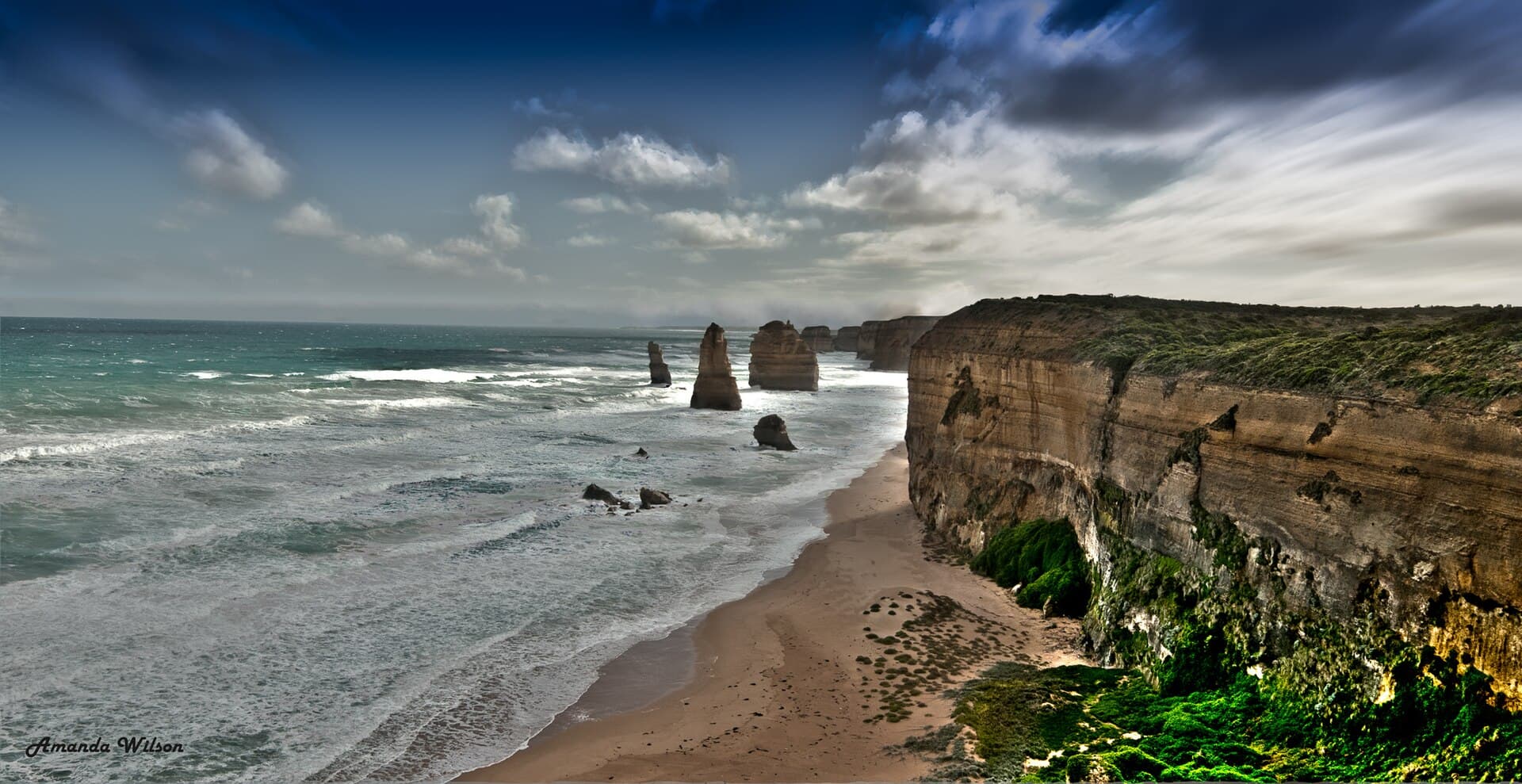
The Great Ocean Road is the usual self-drive showpiece and still a valid Melbourne day-coach purchase if you have one free day and no wish to pilot tourist traffic. Overnight is the version people describe afterwards. Day trip is the version that fits a short city stay. See Great Ocean Road.
Where self-drive usually wins
East-coast hops you chose on purpose — not Sydney-to-Cairns as a stunt, but a two- or three-night coastal slice where the driving is the point. Tasmania’s triangle if you like driving and bought a parks pass. Great Ocean Road with a night on the coast. Much of the Coral Coast if you accepted the distances and the fuel plan.
These are sealed, populated-enough circuits with towns that still have a meal after 6 p.m. They punish haste, not competence.
Where a guide is often saner
Uluru logistics — sunrise timing, parks-pass gates, heat, and the fact that the climb is closed. You can self-drive the sealed circuit. Many first-timers still sleep better on a licensed departure that already knows the car-park rules.
Kakadu in the wet, and many Kakadu side roads in any season. Road reports are part of the itinerary. A 4WD is not a permit.
Unsealed 4WD country anywhere you do not already have the skills, the comms, and the contract. Guided does not mean childish. On country that is jointly managed with Traditional Owners, a briefing is the visit.
A hybrid that works
Fly between hubs. Hire a car inside one region. Buy one specialised day from a licensed operator. That pattern covers more successful first trips than a national campervan fantasy or a three-week coach that never lets you walk around the block.
If you refuse to fly domestic, pick one state and stay. Australia is not France in a hire car. The east-coast itinerary flies the long gaps on purpose. Copy that habit even if you rewrite every night.
Decision shortcuts
- If the road is sealed, the towns are close enough, and you like driving: self-drive.
- If the difference between a look and a visit is a permit, a track report, or a cultural briefing: guided.
- If you are arguing about identity (“we are not tour people”): you are not ready. Name the region again.
Read how to plan on the homepage if the calendar is still blank. Then choose a climate, not a slogan.